#WhyWeDoResearch Campaign
"Giving researchers, patients and the public a voice"
  • Home
  • Campaign background publication
  • COVID19 Support Tweetchats
  • JPUH Research, Evaluation and QI Scholarship Posters
  • NMAHP-RES Student Research Placements
  • Guest Blog (NEW)
  • Events & Publications
  • Official videos
  • Opportunities for participants
  • Ambassadors
  • Collaborators
  • Downloadable documents and templates
  • Photographs
  • Links to blogs / articles
  • Survey results 2015
  • Tweetfest (2016)
  • Tweetfest (2017)
  • Tweetfest (2018)
  • Tweetfest (2019)
  • JPUH Scholarship posters

Christina Doyle, Operating Department Practitioner, The James Paget University Hospitals NHS Foundation Trust. NMAHP Research, Evaluation and QI scholar 2024/2025: A JOURNEY TOWARDS MY IKIGAI

7/4/2025

5 Comments

 
Picture
With thanks to JPUH NMAHP-RES and NICHE for the scholarship programme and associated funding. 

​I have spent my entire professional life giving my heart and soul to my work, believing that anything less than 100% effort and commitment was a insufficient. The perpetual balancing act of work and home meant that doing anything to improve myself professionally felt nothing short of self-indulgent. However, having spent the last 2 years studying to get my CV in order, I dared to dream and took a project idea to the NMAHP scholarship team.
Picture
​Through the programme there was an opportunity to evaluate the possibility of helping develop services and realise my long-held ambition to work towards becoming a Surgical Care Practitioner...what I did not expect was the Pandora’s box that opened: out of it spilt issues of organisational readiness, competing agendas, professional silos, disjointed networks and most importantly facing challenges of how to navigate it all while seeking to remain a positive force for change.
My registered profession of Operating Department Practice is a rather ninja like – always in the shadows, executing compassionate patient care with precision and little fanfare: away from the public eye in the depths of theatre, poorly understood or often completely unknown. Not everyone wants to step away from this underworld that we know so well and nor should anyone be forced to, but there are those among us who feel frustration at the disparity of professional opportunity we face knowing that our skills, experience and commitment have the potential to add value to wider communities of practice.
The real question for my scholarship project became how to help make such voices heard and how my own development and project work may assist in making the invisible, visible.
Under the Jedi Master like influence of the facilitation team and my mentor, within the safe space created by fellow scholars and some of the inspiring people I have met, something was re-awakened within me. Alongside learning opportunities and tasks, I was given ‘permission’ to take the time needed for self-reflection and evaluation: what am I good at? What do I actually want?
Inadvertently, the scholarship process has acted as a catalyst to bring about the confluence of many aspects of myself and in so doing enabled me to edge closer to my professional Ikigai: my reason for being. 
Picture
​My passion and profession have overlapped for many years, making me content and comfortable (in short, I love my job!), however, my project has really challenged me to allow myself to be inspired and consider what ‘the world’ needs from me.
I have come to realise that there is a profound brilliance in the difference that can be made by any individual connecting with others, truly reflecting on and sharing experiences, being open to possibilities and challenges and most importantly having the self-belief and confidence to seek new knowledge.
Picture
My scholarship journey has taught me that with empowerment and bravery, even a humble ODP can make an impression that has the potential to open minds, which when approached correctly, can align with wider agendas and create a positive environment for change.

Further reading available at: https://www.calm.com/blog/ikigai
5 Comments

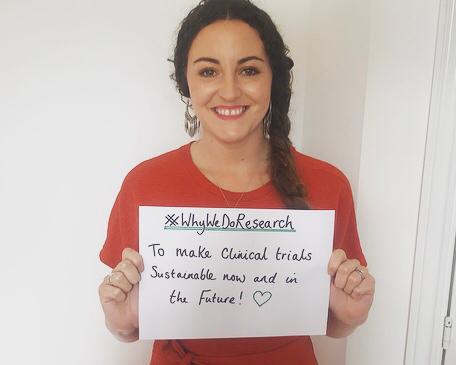
Making clinical trials greener – 5 ways how research nurses could make a difference by Siobhan Parslow-Williams @PWSiobhan

28/9/2020

16 Comments

 
This has been written for nurses by a nurse but could be transferable to all those involved in clinical research.
​
Picture
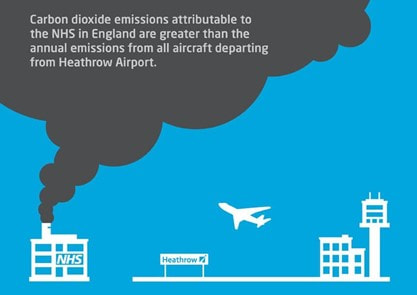
Climate change is the biggest threat to global health in the 21st century and the NHS is responsible for approximately 5% of all carbon emissions in the UK, which is more than the carbon emissions from Heathrow airport every year! In fact, the NHS is the biggest public sector greenhouse gas emitter in the UK.
Picture
​More extreme weather caused by climate change, such as frequent heatwaves and cold weather, have a serious impact on public health. Poor air quality increases conditions such a respiratory and cardiovascular disease, including lung cancer, leading to a reduced life expectancy.  Clinical research is vital to addressing the challenges we face now and, in the future, especially to meet the health impacts of our changing climate. The evidence generated from high quality clinical research improves patient care and can help the environment. A large proportion of NHS emissions come from pharmaceuticals, therefore clinical research plays a crucial role in avoiding medical waste by identifying ineffective and/or harmful treatments.

Studies have found that clinical research is substantially carbon intensive and more needs to be done to reduce the carbon footprint of clinical trials. One multisite international study, that recruited 10,000 participants, was found to have the same carbon footprint as approximately one person taking 525 round trip flights from London to New York. ​

​The NIHR recently published the latest Carbon Guidelines aimed at researchers and states ‘Research is a core part of the NHS and the National Institute for Health Research (NIHR) must play a role in reducing the carbon emissions from health research.’
 
The NHS is committed to becoming carbon neutral as soon possible and launched the Greener NHS campaign at the beginning of 2020. Sir Simon Stevens, NHS Chief Executive stated “….we are mobilising our 1.3 million staff to take action for a greener NHS, and it’s why we’ll be working with the world’s leading experts to help set a practical, evidence-based and ambitious route map and date for the NHS to reach net zero.’

Picture
How could research nurses make a difference?

Nurses make up the majority of the NIHR research delivery workforce and are key leaders within the organisation. The RCN released a position statement in October 2019 saying ‘Nurses have a duty to protect and promote public health in the face of these threats and have a unique and vital role to play. Their expertise, diverse roles and the trust invested in them mean they can be leaders in protecting the health of the public from the consequences of climate change’.  So what could research nurses do to help? Here are 5 suggestions for individual, local and system level actions research nurses could take.
  1. Take individual action. The global nursing workforce is the biggest healthcare workforce in the world. Nurses taking individual and community action can have a big impact. The Alliance of Nurses for Healthy Environments have begun a new movement called Nurses Drawdown and asks nurses to pledge to taking action in 5 key areas. For more information and to join the movement go to https://envirn.org
  2. Join a network: such as the Green Nurse Network.  This informal network gives nurses an opportunity to connect with other likeminded nurses working to tackle the climate emergency https://networks.sustainablehealthcare.org.uk/network/green-nurse-network Follow them on Twitter @Greennurse.
  3. Make changes within your scope of professional practice. Changes could include certain elements of practice or whole care pathways. For example, asking study teams to use electronic site files which cut down on paper resource use, cost and also saves storage space. Switching to remote patient study visits, if appropriate, to cut down on patient travel, space and to save patient/staff time. Exploring if study teams can conduct monitoring visits remotely and asking could Site Initiation Visits and study training be done using online methods such as MS teams.  These changes could reduce travel emissions, staff time and the associated financial costs.
  4. Take system level action. You could ask your trust or organisation to publicly declare a climate emergency, if they haven’t done so already. To find out how to do this visit https://healthdeclares.org who can give you information. You could also ask your trust to sign up to the award winning Green Ward Competition, which is a leadership and engagement programme aimed at cutting carbon, improving patient care and saving money, for more information go to https://sustainablehealthcare.org.uk/green-ward-competition
  5. Education. Learn more about sustainable healthcare. Educate your colleagues about the impacts of climate change on public health. The Nurses Climate Challenge website https://nursesclimatechallenge.org gives information about the role of the nurse and climate change. Learn how to implement environmental changes in practice. The Centre for Sustainable Healthcare offers various practical online courses aimed at healthcare professionals and staff. For more information visit their website https://sustainablehealthcare.org.uk/courses
By taking action individually and professionally clinical research nurses could make a big difference and help make clinical trials sustainable for the future.
​
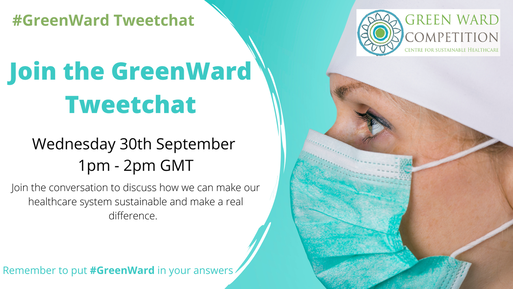
If you’re interested in discussing sustainable healthcare, join the @SusHealthcare #GreenWard tweetchat on Wednesday 30th September 1pm – 2pm UK time.

Picture
Siobhan Parslow-Williams @PWSiobhan
Bsc Hons RGN,
Sustainability in Quality Improvement Lead at Centre for Sustainable Healthcare, Oxford, UK.
Former Senior clinical research nurse,
NIHR ALP graduate 2018-19, 
​
16 Comments

Igniting the spark of clinical research inquiry for undergraduate student nurses by Siobhan Egan

7/7/2019

265 Comments

 
My name is Siobhan Egan and I work as a clinical research nurse at the Clinical Research Unit (CRU), University of Limerick Hospital Group, Ireland. The CRU is a subunit of the Clinical Research Support Unit (CRSU), Health Research Institute, University of Limerick. The CRSU endeavours to conduct and support outstanding transformative research in order to improve the health and wellbeing of individuals, communities and populations. The role of the clinical research nurse is pivitol in supporting various research projects including industry, pharmaceutical and academic led clinical trials.
​
​I really enjoy the diversity of my work which includes clinical, research, leadership and educational responsibilities. I am passionate about student nurse education, and as a clinical nurse I always enjoyed mentoring students. Recently, I gave a tutorial to 4th year student nurses which focused on a piece of research I undertook as part of my Masters in Nursing. Surprisingly I received many questions about my current role as a nurse in clinical research. These queries centred on the duties of a research nurse, what qualifications are necessary, and career advancement. 
​
Picture
​Unfortunately, many student nurses internationally don’t have the opportunity to undertake a placement in clinical research and there is little emphasis on clinical research in the undergraduate nursing curriculum. I believe that if we are to ignite the spark of research inquiry among our graduate nurses then the opportunity to undertake a placement in clinical research is necessary. Personally I have always learned from the lived experience and can honestly say I never truly understood research methodology until I began working as a research nurse
​
​I completed my MSc in Nursing in 2014, and I have to admit that at times I found it a challenging process! Upon reflection, the experience and knowledge I have gained from working as a nurse in clinical research would undoubtedly have supported me in obtaining this academic award. I want students to know that there is a growing body of clinical research and nurses are at the forefront of this exciting career option. I enthusiastically promote and encourage clinical research nursing.

https://www.ul.ie/hri/
Picture
265 Comments

The Philosophy of Research by @srooleyharp

2/2/2019

114 Comments

 
Through time, mankind always was looking to advance as a species. Humans, being a cerebral creature, always wanted to further progress their understanding of everything. It is how we have separated ourselves as a species, rising from the dust to seize control of the planet and nature. As a species, we have moved far, and progressed further than any other creature ever before in the history of this planet we call home. This was only possible through research.

Research is what made us who we are. We are research, but what is it?

Modern research originated in Ancient Greece.. When the ancient Greeks travelled the world they encountered an array of different cultures and people. From this, philosophy was born. Society was faced with new questions, in part due to the plethora of cultures they became exposed to. The answers to these new questions posed was what led to the works of the likes of Socrates and Aristotle.[i] When the human species was faced with profound questions about life, philosophy was born. Through philosophy, more questions started to be asked, which in turn led to answers. Sometimes the answers led to more questions, other times they simply led to us knowing and understanding more.

With every year we are becoming more and more advanced as a species; we have achieved feats once considered impossible. Man has walked on the moon, our genome has been edited, we are on the verge of creating artificial intelligence ex nihilo.

Research is the pillar upon which modern medicine stands. Every drug, every procedure in medicine has been subject to extensive research. All of it was done to make things better, every question that can be asked was asked. We do research to make things better, asking questions, probing for the truth.

There is no one true answer to why we do research, the answer to this question is akin to asking, “why are we human?” Humans are a curious species, constantly asking questions, constantly seeking answers; constantly doing research.
Doing research is one of the best ways to be able to contribute to a greater goal and finding meaning in life. A life of research is not one that leads to money, one does not find fame and glory in doing research, often it involves blood sweat and many tears. However, nothing that is easy is worth fighting for, knowing that as an individual one is able to be an agent of change, leading to the world becoming a slightly better place. Research is in itself a noble goal, one worth fighting for. We do research because it is what makes us human.

[i] Peterson, J. B. (2018). 12 Rules for Life. Random House USA. Forward page “xxii”

 
Picture
114 Comments

Technology to Support People Living with and Beyond Cancer by @shereenabhani [Professional Perspective]

19/11/2018

193 Comments

 
People living with and beyond cancer (PLWBC) face many challenges, including failure of communications with their clinical team and sub optimal support for early detection of symptoms and adverse events that can have a detrimental effect on their ongoing care.
With the increased use of oral anti-cancer agents, patients are often at home when they experience a side effect and therefore need support in deciding how to self-manage and/or report it to their healthcare professional. This decision is often time-sensitive as a delay in reporting some side effects can lead to long term complications, life threatening events and an interruption to their cancer treatment. Involving and supporting patients in managing their condition is empowering and provides them with some of the control they often lose during the cancer journey.

The use of technology to support communications and early detection of problems is well documented in the literature with some studies evaluating their use in cancer care. Technology has the potential to offer a complementary supportive function by being available 24/7 to provide advice and guidance while monitoring patient reported outcomes (PROs) whenever the need arises for information in regards to their own therapy thus offering alternative processes for all to have equal access. However, despite this positive evidence, new technologies have proven slow to become accepted, integrated and implemented in practice resulting in innovations remaining within the realm of research and not within the reach of everyday practice. This could be partially due to a lack of an implementation strategy.

Picture
At Kingston University, I am a member of a multidisciplinary team of pharmacists and mobile health experts that has designed and developed a holistic platform that offers such support to cancer patients. CanAdvice is an award winning platform that follows a patient-centred design supported by an in depth needs assessment of cancer patients. CanAdvice supports users with self-management and reporting of adverse events. Following successful validation and usability studies, CanAdvice is now in clinical trial at the Royal Marsden Foundation Trust. Preliminary results show high acceptability among users, and fantastic feedback.
Picture
Picture

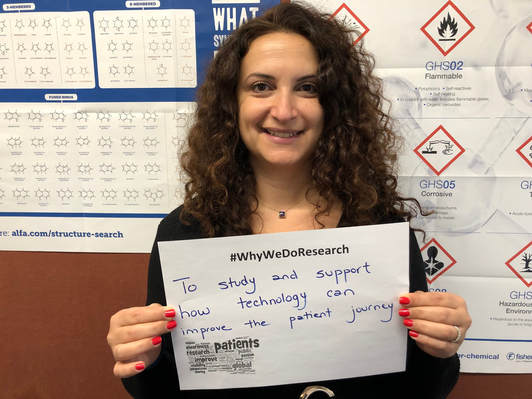
​I’m involved in this research to study and support how technology can improve the patient journey.
​
Recent interview on the topic with myself at British Oncology Pharmacy Association annual conference https://www.vjoncology.com/video/ahh-9e604um-smart-app-to-allow-patients-to-manage-their-side-effects-independently/
​
193 Comments

You're an ODP??? What is that?! by @emmamarshall981 [Professional perspective]

4/11/2018

92 Comments

 
Hi! I’m Emma and I’m a Clinical Research Practitioner for my local NHS Hospital.
​
By background, I am an Operating Department Practitioner (ODP) who specialises in anaesthetics for general, orthopaedic and vascular surgery for a number of years. I also spent a great deal of time in A&E and ICU responding to emergencies and was also a mentor for student ODPs. 
Picture
​My daily job involved working closely with anaesthetists to keep patients safe during their surgery and being the patients advocate. I made the big move to research in 2017 and work with a wonderful team made up of AHPs, Nurses and Clinical Research Assistants. Being an ODP starting out in the world of research was a big jump and somewhat unheard of for my profession, however it has allowed me to transfer niche skills learnt from the perioperative environment and weave them into the world of clinical research with continuing success. Whilst what goes on behind theatre doors remains a mystery for many, for an ODP, carrying out research in this specialist area allows me to implement trials safely and effectively due to the niche understanding of how and why surgical care pathways work in such a way.  This in turn has seen patient and colleague involvement increase dramatically and trials running very smoothly. 
Picture
​My day to day research job involves recruiting patients to a number of clinical trials I work on, however this can vary on whether it is a planned or an emergency admission. The majority of my trials are surgical, breast and critical care lead and I’ve recently branched out into the world of cardiology, which is a scary but exciting new avenue!

​A typical day for me involves screening patients, answering queries, attending clinic appointments, seeing patients for various trial needs, taking blood, preparing and giving IV’s. I also attend MDT’s, meet with various colleagues on a daily basis and educate staff on current clinical trials being carried out in order for them to be implemented and delivered effectively and efficiently. Whilst the majority of my day is planned, it can all go out of the window if I’m rung to recruit a patient who has been admitted for emergency surgery or has been admitted to A&E after having a cardiac event. Sometimes I’m only giving minutes to have an in-depth conversation with a patient about whether they’d like to be involved in an emergency based research trial and I absolutely applaud these patients for taking the time to participate in research when they’re feeling at their absolute low or have been giving a potentially life changing diagnosis, but still want to help make a difference. 
Picture
​My absolute favourite part of the job is working as part of a multidisciplinary team across the hospital and as a result, I have the absolute pleasure of working with some of the most wonderful Doctors and Nurses pictured within this blog that I never would have come across if it wasn’t for research. We all bring something different to a clinical trial to make it succeed for ourselves and our patients. 
Picture
Picture
​I am involved in research because the future of our healthcare and its advancement relies on good quality research being carried out today. It takes a multidisciplinary team approach from all backgrounds to come together and deliver exceptional results and I’m thrilled I can offer something a little different into the world of research by being an ODP!

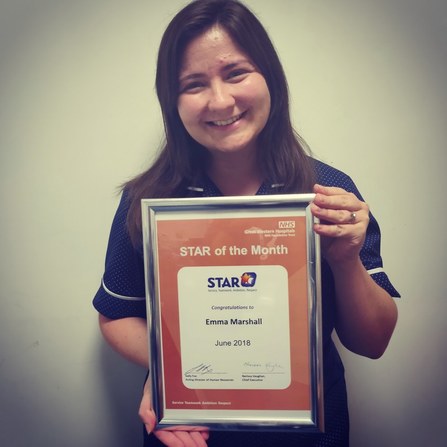
​AHPs can really help blaze the way in this field! So much so, I won an award for my contributions towards research at my local hospital. If an ODP can do it, anyone can. Research within the NHS is an extremely rewarding job and it’s humbling to see patients eager to be a part of helping to make a difference. 
Picture
​I can be found on Twitter, so if you want to know more, please do get in touch! https://twitter.com/EmmaMarshall981

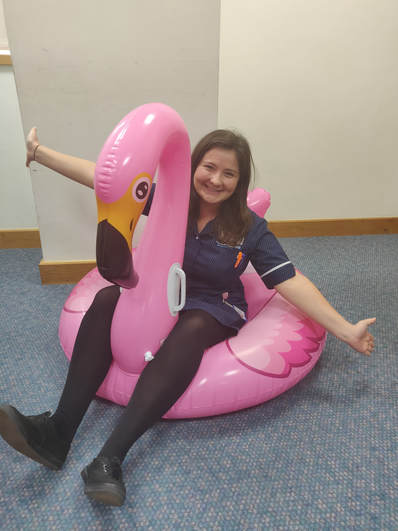
​And yes…that is a picture of with me an inflatable flamingo! I won it as part of an anaesthetic trial I work on. Blame the anaesthetist…! 
Picture
92 Comments

Spotlight on Paediatric Research Month (Oct '18): Blog 1 - Comparing paediatric tweetchats from Tweetfest 2017 and 2018; paediatric recruitment

1/10/2018

7 Comments

 
I have been very lucky to have had the opportunity to host two Twitterfest chats for the #WhyWeDoResearch community with my colleague’s @trifidNebula73 and @mazp74 highlighting paediatric research.
​
We held the first twitter chat in 2017 and the second one in 2018 during the #WhyWeDoResearch Twitterfest week. We consciously hosted the chats at the same time one year apart midweek at 12pm.

​
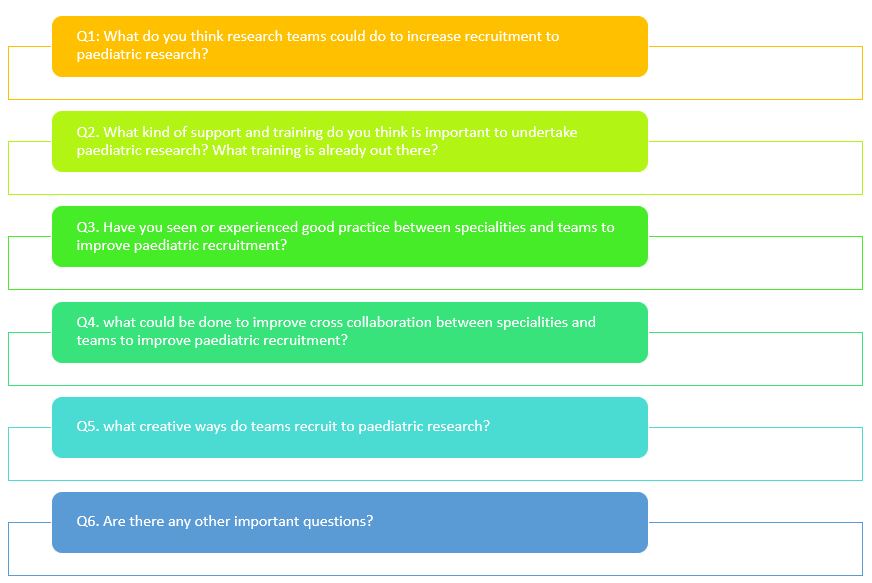
Title of the tweetchat: ​Increasing recruitment to paediatric research.

The questions used were...
Picture
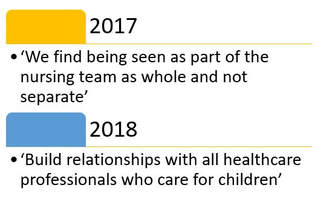
As research nurses we wanted to know if there would be differences in the answers one year apart. In reality the answers were very similar and to our surprise the enthusiasm and passion for paediatric research was strong both years. As one of the guests put it ‘We need to excite people about research!’

Patients, public and staff joined the chat so we had a variety of perspectives to draw from. It truly was a fun packed hour, so many ideas and new ways of working, networking and sharing experiences and building on the success of the #WhyWeDoResearch community.
I would like to share a few findings with you from the Twitterfest.

Answers for question one focused very much on the relationship building between the research team and the clinical area where the paediatrics are to be recruited from.

Example: What do you think research teams could do to increase recruitment to paediatric research?
Picture
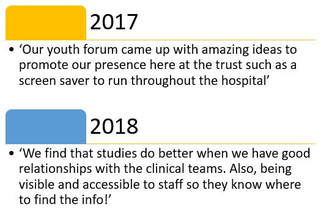
It was generally agreed that the research team is not isolated when it comes to research and recruitment of paediatric patients, everybody who cares for children are key to the recruitment process. One young person explained to us we needed to be out and about in schools promoting research. Both years the voice of the paediatric patient was discussed and how patient’s stories are valuable. This involves young people talking to young people about research.
​
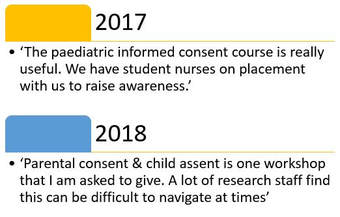
Question two concentrated on training for paediatric research teams and both years the paediatric communication and informed consent course was highlighted as a very valuable resource. Interestingly, there was much discussion surrounding the importance for research nurses to support and share knowledge with the next generation of research nurses. Student nurses were discussed at length and ideas around shadowing the research teams and providing the student nurses with research workbooks was also shared as good practice.
 
Example:
Picture
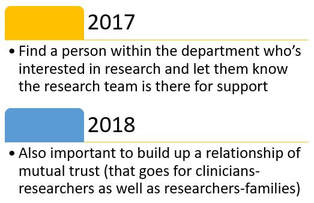
Good practice between teams and good relationships between different specialities was the focus for question three. Collaboration to help recruit patients to studies was needed. Recruitment to research cannot be achieved without the involvement of the service users and the multi-disciplinary team. This theme was apparent throughout our twitter chat. This question definitely showed that research is everybody’s business and research cannot be a standalone speciality.
Picture
Question four looked at what could improve across collaboration between teams to improve recruitment to paediatric research. Engagement for both patients and staff was highlighted and feedback throughout the study not just at the end was suggested.

​Example:
Picture
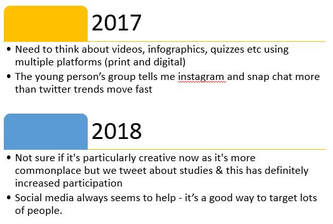
Discussing creativity in paediatric research was the liveliest part of the chats for both years and it was a lovely end to the chats too. Question five gave everybody ideas to take away with them to help promote paediatric research. What I can say is that all who participated in the chat both years are very creative. We had ideas such as podcasts, art competitions, posters, banners, all ways of attracting paediatrics to research.
​
Example:
Picture
What was apparent two years running was that the use of social media is a strong factor in highlighting paediatric research. Although discussions regarding fear and apprehension had stopped a lot of people accessing social media it was felt that to engage with young people social media was the way forward.

Lastly question six, any other important questions? We had so many ideas for a further twitter chats and Claire Whitehouse @ClaireW_UK from the #WhyWeDoResearch community asked us to consider having a spotlight month on paediatric research which we have jumped at the opportunity to highlight research in this area.

All three of us are very honoured to host another twitter chat during this month’s spotlight which will take place on Wednesday 17th October, 8pm (BST) / 3pm (EST) / 9pm (Madrid).

It’s amazing how social media can connect enthusiastic people with a passion for paediatric research.
​
We are looking forward to hosting the tweetchat, hope you can join us too.
7 Comments

Can patients that participate in research be a source of  Patient and Public Involvement in research? by @Lynn_laidlaw

16/9/2018

8 Comments

 
​I spend hours thinking about and participating in PPI, mainly for research, its my passion. I am a Patient Insight Partner with Arthritis research UK, part of the Heart Voices group at British Heart Foundation and an active member of Dr Allison Worth’s PPI Group in Edinburgh. I have recently joined the Public Engagement Group at the Chief Scientists Office in Scotland. As I attend a District General Hospital and have a rare, complex disease, opportunities to actually participate in research have been limited.

Picture
Picture
Picture
Picture
That changed recently whilst attending cardiology for investigations. I was invited to participate in a clinical trial looking at whether a specialist type of coronary angiogram could help diagnose microvascular heart disease. Of course I accepted not least because I was desperate to receive a diagnosis for the disabling symptoms that were having such an effect on my quality of life. ​
I viewed the process thereafter through the lens of my PPI experience. I felt the Patient Information Sheet ( PIS ) was overly technical, is it informed consent if the patient doesn’t realise what they are consenting to? The Dr admitted that the PIS had caused confusion for most patients.
 
After the angiogram I was randomised to the results group, told I had microvascular heart disease, given some medication and sent on my way. I have no cardiac risk factors apart from my underlying auto immune disease, no one was willing to explain my diagnosis in the context of that. I was given no written information. I wasn’t asked about ongoing communication from the trial team and whether I would like a copy of my and the trial results.
 
I reflected on my experience and felt I had some insight to offer the trial team not just confined to improving the PIS and the patient experience. Recruitment and retention can be a issue in clinical trials, so surely patient involvement could only help? Researching my diagnosis proved difficult as there is a paucity of research into microvascular heart disease. I started thinking about the research questions that would be important to me as a patient and felt I would really like to help disseminate the research findings.
 
I had all these thoughts and ideas but no way of communicating them to the trial team! My role was to be a recipient of the research process, not an active participant! I reflected on all these points and then decided to e mail the PI with my thoughts. They were very receptive and as a result we are due to meet soon. 

​
​Of course you may think I am not a “ typical “ patient but I don’t believe I am very atypical! If we believe that PPI in research is essential then shouldn’t we be actively promoting PPI by any means?
Picture
Give trial participants a chance to be active participants, ask them about their experience, what could improve the process and whether they would like to be involved in identifying follow on research questions.
 
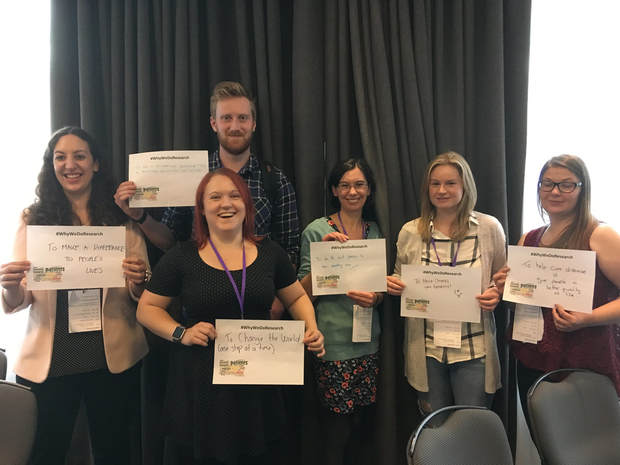
My #WhyWeDoResearch: Because it matters, it can be  the difference between life and death, living or existing. It gives me hope and makes me feel I still have something to contribute despite ill health. Partnership and collaboration improve all research outcomes.
​
 
Picture
8 Comments

#WhyWeDoResearch - A Commercial Perspective by @@LeighBoxall

4/9/2018

170 Comments

 
Hello, my name is Leigh Boxall and I’m a Site and Resource Manager for a global Commercial Research Organisation (CRO). I know that the world of commercial research can sometimes be perceived as “the dark side” and having only recently moved into Industry, I wanted to share my experience and perceptions to date.
​
First; a bit of history about me and how my reason for doing research has changed during my research career to date.
I started out as a Research Physiotherapist, getting involved in local small-scale research projects because my manager told me I “asked too many questions” about why we did the things we did! It was a fantastic opportunity to help shape a protocol, collect data and analyse the results. I really appreciate now why research takes so long to develop and how hard it is to disseminate and embed in practice.

I guess my very first #WhyWeDoResearch was “to better understand Physiotherapy treatments and promote evidence based practice”. 


Picture
​I then moved into a Research Practitioner role for the CRN. I was working on a mix of commercial and academic studies. I saw that patients and their families benefited from taking part in studies; not only from the new treatments but from the added care, investigation and support they gained from participating.
​
My #WhyWeDoResearch at that stage was “to provide the best care and evidence for patients and their families and offer as many people as possible the opportunity to take part in research”.
 
Later, as a Lead Research Practitioner, I was overseeing a large portfolio of studies, across all therapeutic areas. It was about this time that the #WhyWeDoResearch community was developing and Twitter became a really empowering platform. We connected with teams across the country and internationally to better understand our shared challenges in delivering research.
Picture
My #WhyWeDoResearch at this stage was “to ensure research is everyone’s business”.

The opportunity to move into a commercial role came about last year and whist I had not considered this avenue before; I knew it would broaden my horizons and provide a new clinical research experience. I was nervous about making the transition. I worried that I’d be surrounded by people who thought differently to me and I’d feel torn between my clinical background and a corporate, profit driven environment.

I won’t pretend it hasn’t been a massive adjustment. Working for a CRO does feel very different to the NHS and I have had to adapt my management style as I find myself leading a team of Clinical Research Associates (CRAs), some of whom I only see face to face a couple of times a year. The global nature of the company means that I liaise with Project Leads from all over the world and overcoming time-zones and language barriers is a must. As a CRO we are trying to meet our customers (the Sponsors) expectations whilst relying on and working with the Investigators and site teams to ensure patient safety and data quality. We have a multitude of metrics and timelines that we are measured against and of course as a business, revenue is an important factor.

However; the thing that has really struck me is that whenever I talk to my colleagues about why they do research; fundamentally their reasons are the same as mine. Patient care and driving improvements in diagnosis and treatment really is at the core of why they do what they do. I’ve seen it at every level of the company. I’m astounded by how many people I’m surrounded by with a clinical background; my manager is a Medic, above her a Nurse, above him a Dentist and above him a Nurse. They all have their stories and experiences of where there are still unanswered questions in their field of expertise and they are all driven by a desire to continue improving healthcare outcomes.

I think there is a lot to be gained from sharing lessons and experiences across healthcare delivery and commercial research organisations. The more we understand about each other’s environments, our strengths and our limits, the more collaborative and effective we become in delivering better patient outcomes.

​I’ll end on my current #WhyWeDoResearch which is to “offer new treatment opportunities to patients and ensure their wellbeing and safety is at the heart of what we do”.


170 Comments

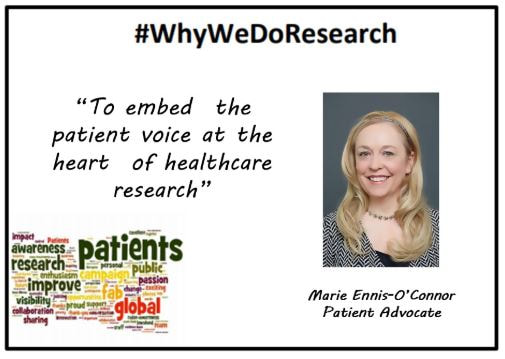
"Principles into Practice: Towards meaningful patient and public involvement engagement in research" by Marie Ennis-O'Connor (@JBBC)

11/8/2018

51 Comments

 
Patient and Public Involvement (PPI) is a practice model of involving service users within the research process rather than research being conducted on them. There is increasing pressure on the research community to include PPI in grant proposals in order to receive funding for new studies. This is a good thing.  PPI is based on a core democratic principle that people who are affected by research have a right to say what and how publicly funded research is undertaken. The advantage of the PPI approach for health researchers are that it leads to the development of interventions which are relevant and acceptable to service users. But there’s a sting in the PPI tail.  It’s something that patient advocates are now speaking out about and challenging the research community on.

It’s all too easy to speak to a patient or carer just to tick a box on a grant proposal, but meaningful involvement is about more than a box-ticking exercise. It’s about shifting the traditional paradigm of patients in research, one in which patients are passive participants, to one in which they are fully involved as expert contributors who have a sense of ownership in research outcomes.

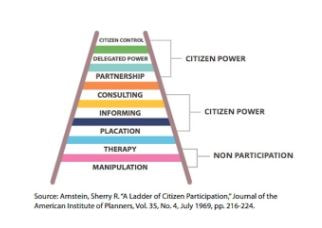
Arnstein’s Ladder of Citizen Participation
No discussion of PPI is complete without reference to  Arnstein’s Ladder. In her seminal paper “A Ladder of Citizen Participation”, published in 1969, Sherry Arnstein wrote, "There is a critical difference between going through the empty ritual of participation and having the real power needed to affect the outcome of the process." Arnstein’s Ladder is from the Department of Housing and Urban Development in the 1960s, but just as applicable to PPI discussions today.
Picture
Climbing the Ladder from non-participation to citizen power, the first rung we come to is “Informing”. Arnstein described this as the lowest rung on the ladder of participation. It’s inviting participants around the table to do not much more than talk over tea and biscuits.  

Climb to the next step, and while this progression has the semblance of patient participation, it is without any power to ensure that their views are acted upon. It’s what RA patient blogger, Annette McKinnon describes as, “the way in which patients are being used as tokens and to help tick the right box.  Where is the attitude that patients are part of the team in healthcare, that we are partners? Why are we always asked to participate inside a predetermined frame?”

We want to move beyond this step toward the top of the Ladder, the point at which patients are actively partnering with researchers to set the research agenda.  Patients and their carers are experts in how a condition affects their lives. Learn from them.  For who better than the patients (and their carers) themselves know the research outcomes that matter most to them?

Let Patients Frame The Question
The exponential rise in research output has seen a decline in quality and mounting concern about high levels of waste, bias, inefficiency and error. To quote Sarah Chapman of Cochrane UK (@UKCochraneCentr), “Knowing what matters most is vital for good stewardship of our finite resources to fund research, ensuring that work goes into seeking answers to questions that patients most want answered.”

Picture
It’s important that patients frame the research question. Historically researchers have framed questions which are not particularly relevant to patients.  For example the research priorities of patients with osteoarthritis of the knee and the clinicians looking after them, were shown in a study to favour more rigorous evaluation of physiotherapy and surgery, and assessment of educational and coping strategies. Only 9% of patients wanted more research on drugs, yet over 80% of randomised controlled trials in patients with osteoarthritis of the knee were drug evaluations.

Conclusion  
We’ve reached a turning point in the development of patient and public involvement in research. We must change our understanding of the role of the patient in achieving healthcare’s potential. To quote melanoma patient advocate, Kay Curtin, “This is a re-shaping in many ways of what are the defined roles in research. We are talking about the patients knowledge and experience being of equal status to that of all the other interested parties on what research grant money should be spent on.”  

When we not only speak to the value of PPI, but also prove its worth is the point at which we will unleash the full potential of patient and public involvement in research and ultimately bring about better outcomes in patient care. My challenge to you is to step into this opportunity, embrace it, and act upon it.  I believe in doing so, your research will be better for it and patient outcomes will improve correspondingly.

Further Reading

Principles Into Practice: Co Design in Healthcare
​
Picture
Picture
Picture
Picture
51 Comments
<<Previous

    Introduction to our guest blogs

    We are delighted to host guest blogs from our fantastic followers. Blogs come from patients, members of the public & from healthcare professionals. They focus on why people are involved in research, what it means to them and what they would like to see happen in the future of research.

    Occasionally, we also host 'Spotlight on...' months - in these months you will see a blog per week from patients, public and staff centred around a specific topic / illness / disease area. We also host a tweetchat on the topic during the same month. Follow #whywedoresearch on twitter to keep up to date with these.

    If you would like to guest blog for us, please contact @ClaireW_UK or @keeling_michael via twitter

    Page launch: September 2015

    RSS Feed

    Archives

    April 2025
    September 2020
    July 2019
    February 2019
    November 2018
    October 2018
    September 2018
    August 2018
    May 2018
    April 2018
    February 2018
    January 2018
    December 2017
    November 2017
    October 2017
    August 2017
    July 2017
    May 2017
    April 2017
    January 2017
    December 2016
    November 2016
    October 2016
    September 2016
    July 2016
    June 2016
    May 2016
    March 2016
    February 2016
    January 2016
    November 2015
    October 2015
    September 2015

    Categories

    All

    RSS Feed

Powered by Create your own unique website with customizable templates.