Background
Gillian Gatiss (@LiverDietitian), is a specialist liver transplant Dietitian at Addenbrooke’s Hospital in Cambridge and is undertaking research that aims to help patients with liver cirrhosis to become better nourished by individualising the nutritional treatment they receive. The research has three parts:
Gillian Gatiss (@LiverDietitian), is a specialist liver transplant Dietitian at Addenbrooke’s Hospital in Cambridge and is undertaking research that aims to help patients with liver cirrhosis to become better nourished by individualising the nutritional treatment they receive. The research has three parts:
- Measure participant’s energy needs by both research-standard and portable energy measuring machines and dietitian’s calculation.
- Measure food intake, appetite and gut hormones.
- Interview patients with cirrhosis to explore their experiences.
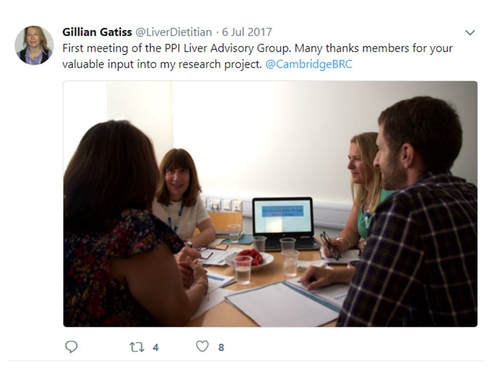
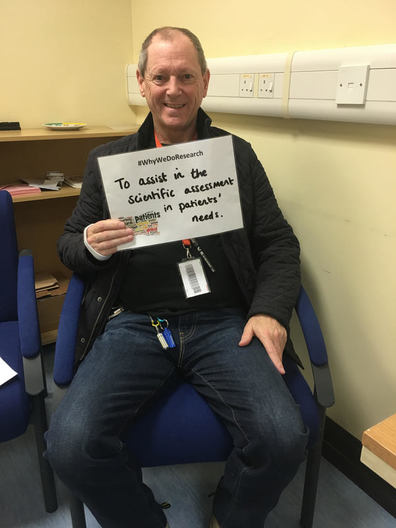
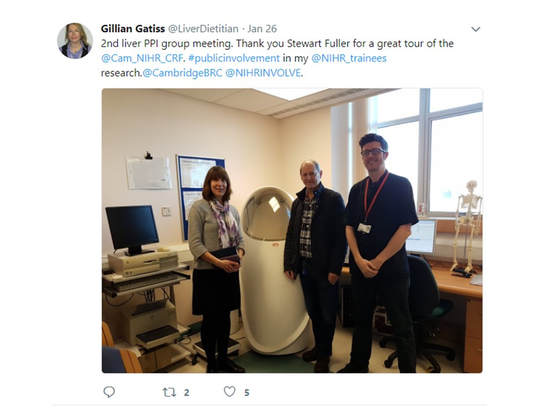
Stephen Bedford is part of Gillian’s patient and public involvement (PPI) advisory group and has answered questions about his experiences of PPI with this research project.
How did you get involved in PPI?
I was first introduced to PPI post-transplant by the dietitians who provided help and support to aid my recovery.
Why did you decide to get involved with PPI?
I decided to accept their invitation in order to assist them to make more scientific assessments of patients’ nutritional needs in order to provide the best advice to give to patients. Everyone has different energy requirements. Currently there is no way of determining this.
Can you tell us a bit about your experience with PPI?
My experience with PPI has all been very positive. Once this particular group started I was involved in surveys to comment on various methods to scientifically assess patients’ energy intake, usage and output. This was mainly contributing from a patient’s perspective whether I found specific investigations acceptable or too intrusive.
I was first introduced to PPI post-transplant by the dietitians who provided help and support to aid my recovery.
Why did you decide to get involved with PPI?
I decided to accept their invitation in order to assist them to make more scientific assessments of patients’ nutritional needs in order to provide the best advice to give to patients. Everyone has different energy requirements. Currently there is no way of determining this.
Can you tell us a bit about your experience with PPI?
My experience with PPI has all been very positive. Once this particular group started I was involved in surveys to comment on various methods to scientifically assess patients’ energy intake, usage and output. This was mainly contributing from a patient’s perspective whether I found specific investigations acceptable or too intrusive.
What would you say to other people about participating in research?
I would advise anyone who is lucky enough to join in with PPI to accept. I have already volunteered to undertake any of the planned tests but unfortunately, I can’t. You can’t be on the PPI group and take part in the actual study. Also, as Addenbrooke’s Hospital have now fixed me, studying me would not provide evidence during the specific phase they are targeting.
Is there anything else you would like to add?
In conclusion, if you are invited to take part in research, please accept. It will help, for example by helping the dietitians make a more scientific assessment of your dietary requirements. This will help you and anyone who is lucky enough to get the transplant they need. Make no mistake, a transplant is a major operation. The more energy you have before and after is crucial to being fit enough firstly for the surgery and subsequently able to recover quicker after. You will need their help. I know I’ve been there.
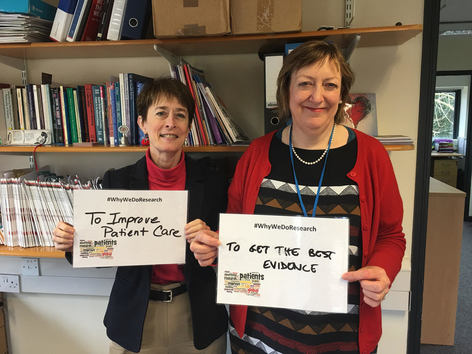
I get involved with research to assist in the scientific assessment of patients’ needs.
I would advise anyone who is lucky enough to join in with PPI to accept. I have already volunteered to undertake any of the planned tests but unfortunately, I can’t. You can’t be on the PPI group and take part in the actual study. Also, as Addenbrooke’s Hospital have now fixed me, studying me would not provide evidence during the specific phase they are targeting.
Is there anything else you would like to add?
In conclusion, if you are invited to take part in research, please accept. It will help, for example by helping the dietitians make a more scientific assessment of your dietary requirements. This will help you and anyone who is lucky enough to get the transplant they need. Make no mistake, a transplant is a major operation. The more energy you have before and after is crucial to being fit enough firstly for the surgery and subsequently able to recover quicker after. You will need their help. I know I’ve been there.
I get involved with research to assist in the scientific assessment of patients’ needs.
 RSS Feed
